COLUMN #252 Home
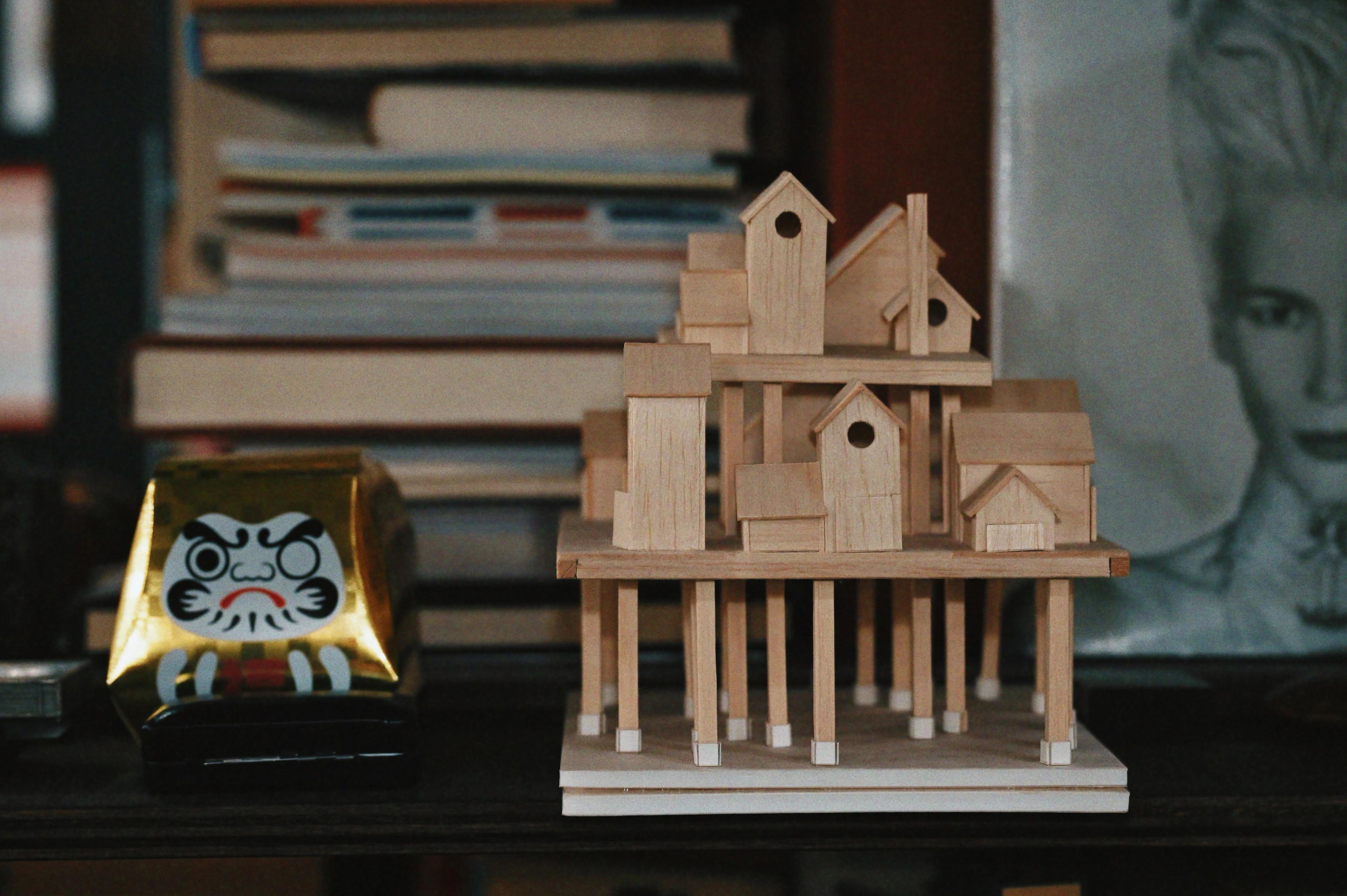
In April 2025, I returned to the country where I was born for three days. I had not been back in 27 years. What brought me home was the passing of my aunt.
She had also only recently returned to the Philippines after spending 37 years living in America. She was deported. After only three short months of being reunited with our family, she passed away. I am grateful that during those final days she was able to be with her sisters and brothers, and her nieces and nephews. At the same time, it is painful to think about the difficult life she lived while pursuing the “American Dream,” whatever that may be, and to know that, unfortunately, she was never able to attain it.
Losing her was what finally pushed me to go home. Although the circumstances of my return were tragic, I went back out of love and curiosity, and out of a desire to know more about my family and my heritage.
Sometimes it feels strange to say that I have three places I can call home and can return to: Canada, the Philippines, and Japan. I often find myself wondering, Can I really call the Philippines home if I haven’t lived there for over 27 years?
During an exhibition by Shirley Wu at Bakuroyokoyama Gallery, she asked the question, “What is home?” I hadn’t realized how difficult that question was until I had to answer it myself as part of the participatory portion of her exhibition. I remember staring blankly at it before haphazardly typing, “A place where I can make community, a place where I can partake in.”
I couldn’t fully understand what home meant to me, or why I struggled so much to answer such a simple question. Perhaps after all these years of living in Japan, I was experiencing a sense of displacement. Maybe it came from a feeling of never quite being enough. I wasn’t Canadian enough, but I also wasn’t Filipino enough because I couldn’t speak the language fluently or didn’t know certain parts of the culture in the way I thought I should. For years, it felt as though something inside me had been lost, but I hadn’t really acknowledged it until Shirley asked that question.
I guess now, a year and a half after Shirley’s exhibition, I am finally beginning to answer it.
Strangely enough, the answer is still the same: a place where I can make community, a place where I can partake in. But I want to expand on what I mean by that.
In many provincial areas in the Philippines, when a family moves to another part of the same village, dozens of villagers and neighbours will gather to physically carry the family’s home and help them move. This is part of Bayanihan, a concept in Filipino psychology centered on communal unity, cooperation, and mutual aid. The root word, bayan, can mean township, nation, or community. There is also the concept of Pakikipagkapwa-tao (Kapwa), which recognizes a shared identity and an inner self that is shared with others. It speaks to how we exist in relation to other people and to the idea that none of us exists entirely on our own. Kapwa is woven into Filipino language and culture and lies deeply within the Filipino psyche.
Although I grew up in Canada, I can see now that both of these concepts were already present in the way I was raised. After immigrating to Canada, my parents quickly built a community around themselves. It became a kind of found family, a village that had a hand in raising my brother and me. My parents not only survived in a new country and culture, but also built a good life. I think their Bayanihan and Kapwa mentality was partly what allowed them to do that. They learned from and participated in the communities around them, while recognizing themselves in other people and, through that, finding a sense of belonging.
Our house was always full of people coming and going when I was growing up. No matter how small the space was, my parents never turned away someone who needed somewhere to stay. At the same time, when they were the ones who needed help, they were never afraid to ask. I have countless uncles and aunties who are not related to me by blood and who proudly remind me that they changed my diaper. I also have countless memories of my parents’ friends picking me up and dropping me off somewhere. Even today, my parents share a townhouse with four of their friends.
Now I find myself here in Japan, sometimes wondering how I have made it through nine years of all the hiccups and struggles that come with living abroad.
Perhaps Bayanihan and Kapwa have also given me the strength not only to survive here in Japan, but to want to thrive. They have helped me recognize connections between cultures, people, and personalities that might initially seem completely opposite. Through those connections, I have come to understand that I am not so different from my neighbours.
Being able to place myself in spaces surrounded by artists and creativity has been another important part of this. The act of looking has helped me connect with others, while also making me more introspective. I feel very privileged to be able to learn through the artists around me like Shirley Wu, photographer Sherry Zhang, and countless other artists have offered me different ways of looking, outward at the world around me and beyond, but also inward, toward myself and toward the question of how I want to move through this world.
I return to the thought of my aunt coming back to the Philippines after 37 years, and of my own return after 27. The circumstances that brought us back were very different, but perhaps neither of us was simply returning to a country. During the final months of her life, my aunt was surrounded by the people she loved. Maybe home is less about the amount of time we have spent living somewhere and more about the relationships that continue to connect us to that place.
For me, perhaps home was never about being Canadian enough or Filipino enough, nor was it about belonging entirely to one place. Home is something I participate in, something we create together.
MIDORI.so Newsletter: